
Philosophy Curriculum #28: When Ambition Meets Power
Plato's Republic VI: Why those who seek power may be least fit to hold it

It’s difficult to ignore what the Epstein files expose: how easily names from royalty, politics and finance move in the same private circles - and how far that world sits from the ballot box.
Why does power so often circulate within circles we never voted for - and rarely see?
Most of the people shaping public life aren’t the ones standing at podiums or knocking on doors. They’re in the plumbing: lobbyists writing talking points, donors bundling money, think-tanks drafting policy, platforms tweaking the information diet.
We still go through the ritual of elections, but influence often flows elsewhere - through money, access and proximity. The most powerful figures aren’t the ones asking for votes. Think of the image of tech executives standing directly behind Trump at his inauguration. It felt almost theatrical - the elected figure at the front, the unelected power behind him.
The people who campaign hardest for office often stand to gain the most from occupying it - financially, reputationally, or simply through proximity to influence.
And that is exactly the problem Plato confronts in The Republic: what kind of person actively seeks power - and should that person be trusted with it?
Guarding the Guardians
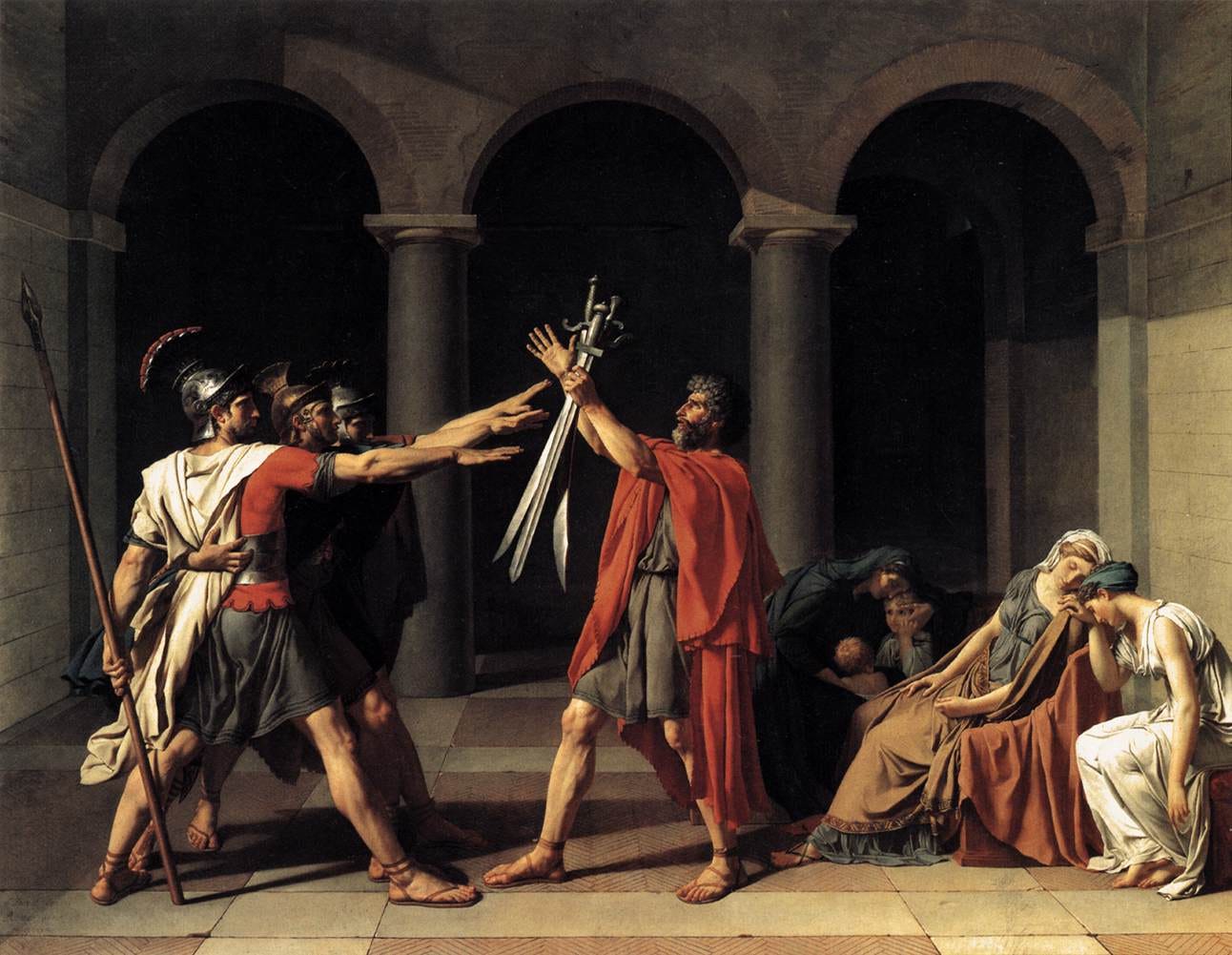
In building his just city, Plato selects his rulers from the guardian class - individuals whose character has been shaped over decades through intellectual discipline, moral testing, and the steady training of their desires. Governance, for him, is not an ambition; it is a burden reluctantly carried.
Once chosen, they are stripped of all usual temptations that distort political life: no private wealth and - controversially - no private family of their own. If ruling offers no personal advantage, the motive to exploit it disappears.
The guardians own nothing. They have no children to inherit property. Their loyalty is directed entirely toward the city they guard and rule. Consequently, shaped by their education and stripped of competing incentives, the guardians will not need guarding.
Contrast this with recent reporting of Trump-affiliated businesses generating millions of dollars from foreign governments, political groups, and allied spending during and after his presidency. Whether each transaction falls within legal bounds is almost beside the point. The deeper discomfort is structural.
Are we watching government, or watching a business model?
When business interests and political authority intertwine, the boundary between public duty and private advantage becomes negotiable. Plato anticipates this problem of incentive design: when private gain is embedded in public authority, misalignment is predictable.
The Craft of Ruling
Plato insists that ruling is a craft. He compares it to medicine and navigation by showing how you wouldn’t let passengers navigate through a storm; you’d rely on a trained captain. Nor would you allow anyone other than the trained medical professional to medicate the sick.
And yet our political system doesn’t ask first: who can actually govern well. Instead it asks: who can win? Who can dominate the stage? Who can fundraise? Who can hold attention?
If ruling is a craft, why do we treat elections as auditions for performance?
So, Who Should Rule?
Plato’s answer is famously radical. His ideal rulers - the philosopher-kings and queens - don’t seek power. Their reluctance is precisely why Plato selects them to hold it.
The idea that those least eager for power - not just in the political space - might be best suited to wield it feels counterintuitive in a culture that treats ambition as evidence of competence. For Plato, however, reluctance functions as a safeguard against corruption.
If I think about it, we regulate our doctors, we certify who can fly planes, we licence who can handle financial risk but in politics - the arena that governs war, debt, borders, and law - the primary qualification isn’t aptitude, it’s the ability to persuade enough people to choose you.
The rest of this essay is for members of the Studio - readers who are building their intellectual life with intention.
It includes further analysis, plus this week’s read, watch and listen list.
