
Philosophy Curriculum #13: The Risks of Asking 'Why?'
From Socrates' trial to whistleblowers and banned books - when curiosity collides with power

Last week, I wrote about why we want to know - that strange hunger Plato called Erōs, the desire that moves the soul up toward truth. But what happens when that desire runs into something that doesn't want it satisfied? When wanting to know becomes the problem?
This week in my Philosophy Curriculum, I found myself in court beside Socrates in both Xenophon’s and Plato’s Apology, in the pages of banned books and silenced voices, thinking about how often curiosity itself has been the thing in trouble.
The Cost of Knowing
In both Xenophon’s and Plato’s Apology, Socrates stands before the Athenian jury, accused of corrupting the youth and dishonouring the gods. What he’s really guilty of is asking questions that make people uncomfortable.
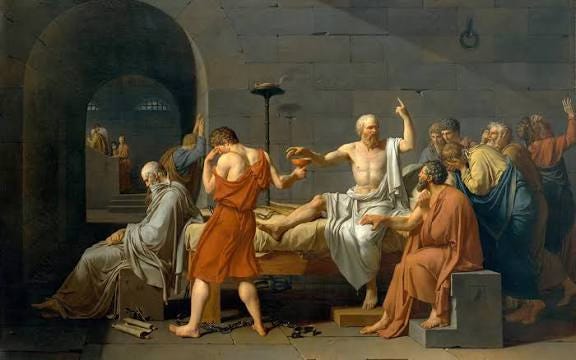
He refuses to flatter the court. He refuses to apologise for philosophy. Instead, he says that the unexamined life is not worth living, and he means it. When the jury votes to kill him, he accepts it.
Reading the dialogue there were two things I kept thinking…
