
Philosophy Curriculum #11: What Counts as Knowledge?
Plato, AI and the problem of believing we know more than we do

We act every day as if we know things. What’s safe to eat, who to trust, what to post, which way history is bending. But how do we actually know that we know?
This might sound like a question only philosophers could love, but it’s the foundation of every decision we make. If our sense of “knowing” is shaky, then so is everything built on top of it - our politics, our decisions, our relationships - even our identities.
This is the next phase of my Philosophy Curriculum where I am spending October with Plato. His work, Theaetetus, was the first to dedicate itself fully to the study of knowledge (epistemology) where he stages a dialogue between Socrates and a young man, Theaetetus, all around the question: what is knowledge?
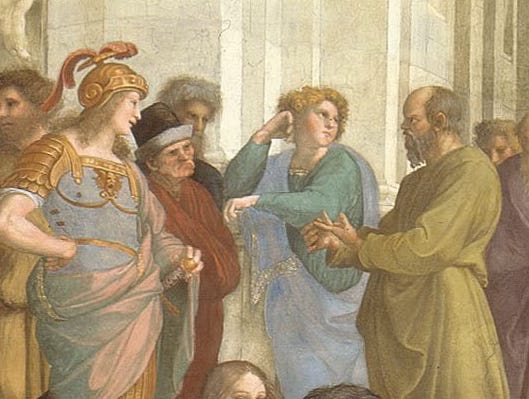
Theaetetus offers three attempts at a definition that we’d probably still give today that all seem to get dismantled.
He starts with defining knowledge as “nothing but perception”. I know it because I can see, hear, or…
