
Notes from the International Booker Shortlist #1
On freedom, survival, and what they cost

I always challenge myself to read the Booker shortlist each year - it’s a fantastic way to meet new voices and stories I perhaps wouldn’t have picked up if there wasn’t the hype around it (such is marketing, I suppose). But this is the first year I’m reading the International Prize shortlist.
The longlist was appealing enough (you can see my reviews on some of the longlisted novels here) but the shortlist - well, there seemed for me to be a theme running across some of them that was enough for me to take the plunge.
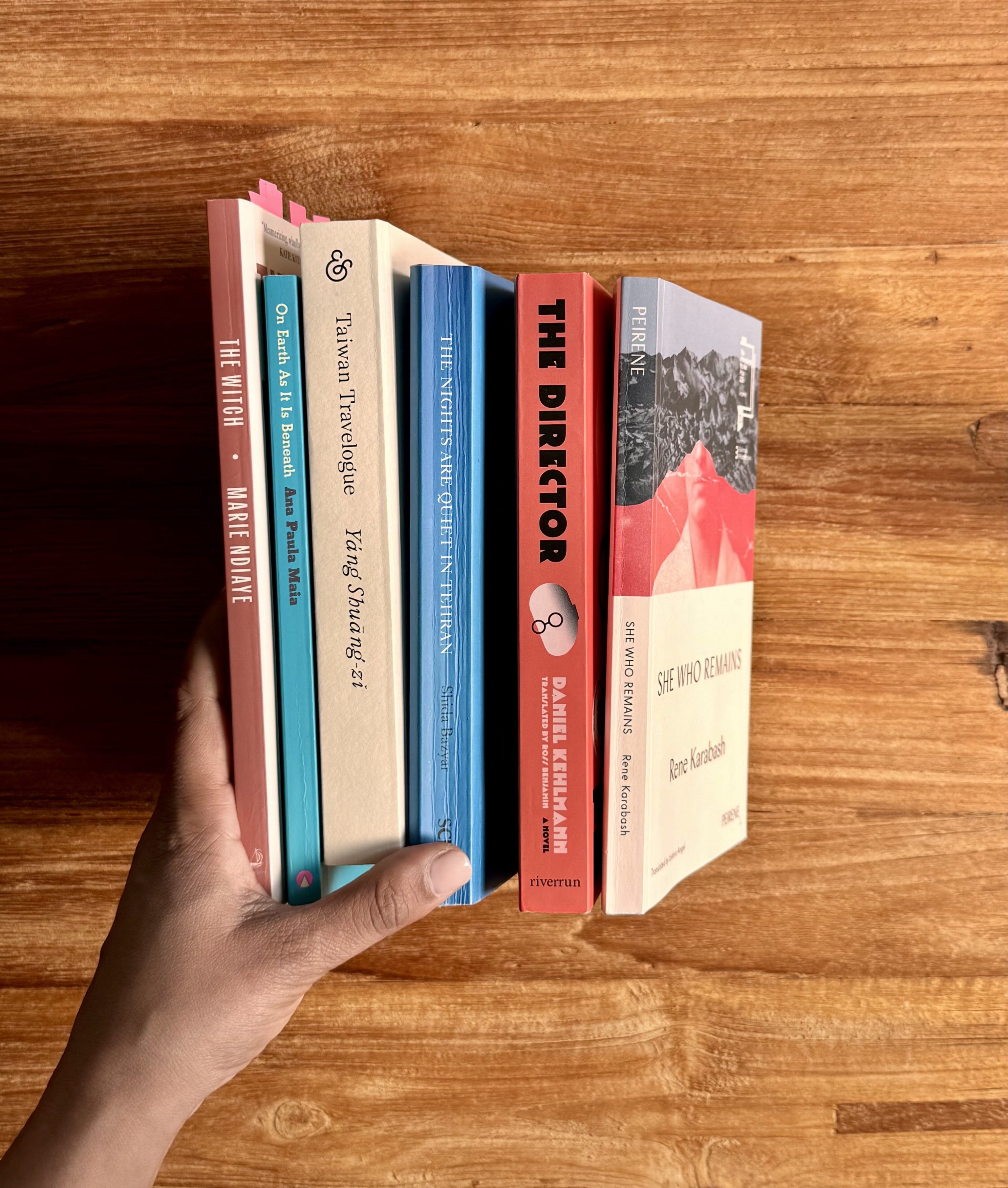
So this post is about those books that immediately stood out to me - the ones I felt were all putting something up to the light as I was reading the blurbs: freedom.
First, On Earth As It Is Beneath follows a group of men incarcerated in a penal colony in the middle of nowhere. Whilst they roam freely within the compound they are tethered to the space by an electronic ankle tag which threatens to detonate if they step outside of the colony’s boundary. We meet them on the edge of anticipation. The colony is being disbanded and they are all, prisoners and wardens alike, being moved where and why? We don’t know. They’ve lost communication with the outside world - it’s almost like they’ve been forgotten, all left to rot.
The blurb around this novel talks about what happens to authority when left unchecked. This, I suppose, has a lot to do with the full-moon hunt conducted by the chief warden. He picks two inmates, removes their ankle tags, and allows them the opportunity of freedom - provided he doesn’t hunt them down and kill them first. It’s a game - one the inmates aren’t supposed to win.
I read this in one sitting. The pacing and the tension propel you through it but I left it with two main thoughts.
First, why did the inmates actively participate in the full-moon hunt? Bear with me on this one…if they didn’t run, if they didn’t try and escape, the guard wouldn’t have taken so much pleasure in hunting them down and killing them. Could that have stopped him from continuing to do it? Or is the human desire for freedom so strong that no matter the odds you will always run? Or perhaps it’s darker than that, they know they are in the middle of nowhere, that they have in some ways been abandoned, and that maybe, standing still is accepting there is no freedom to actually run toward.
Second is Bronco Gil - a prisoner who is physically more than capable of overpowering the institutional authority. He is a professional killer after all and the book takes a number of occasions to emphasise his physicality. So why doesn’t he? Even when the number of prisoners starts dwindling into single digits, why doesn’t he just kill the guards? Is it some strange sense of internalised servitude?
I think it all comes back to the epigraph, attributed to Bronco Gil himself:
“In the end, we’re all free because in the end, we’ll be dead.”
I read this first as nihilism but actually, by the time I finished the book (I won’t give away spoilers here), I started to question whether this is the most honest line throughout the entire story.
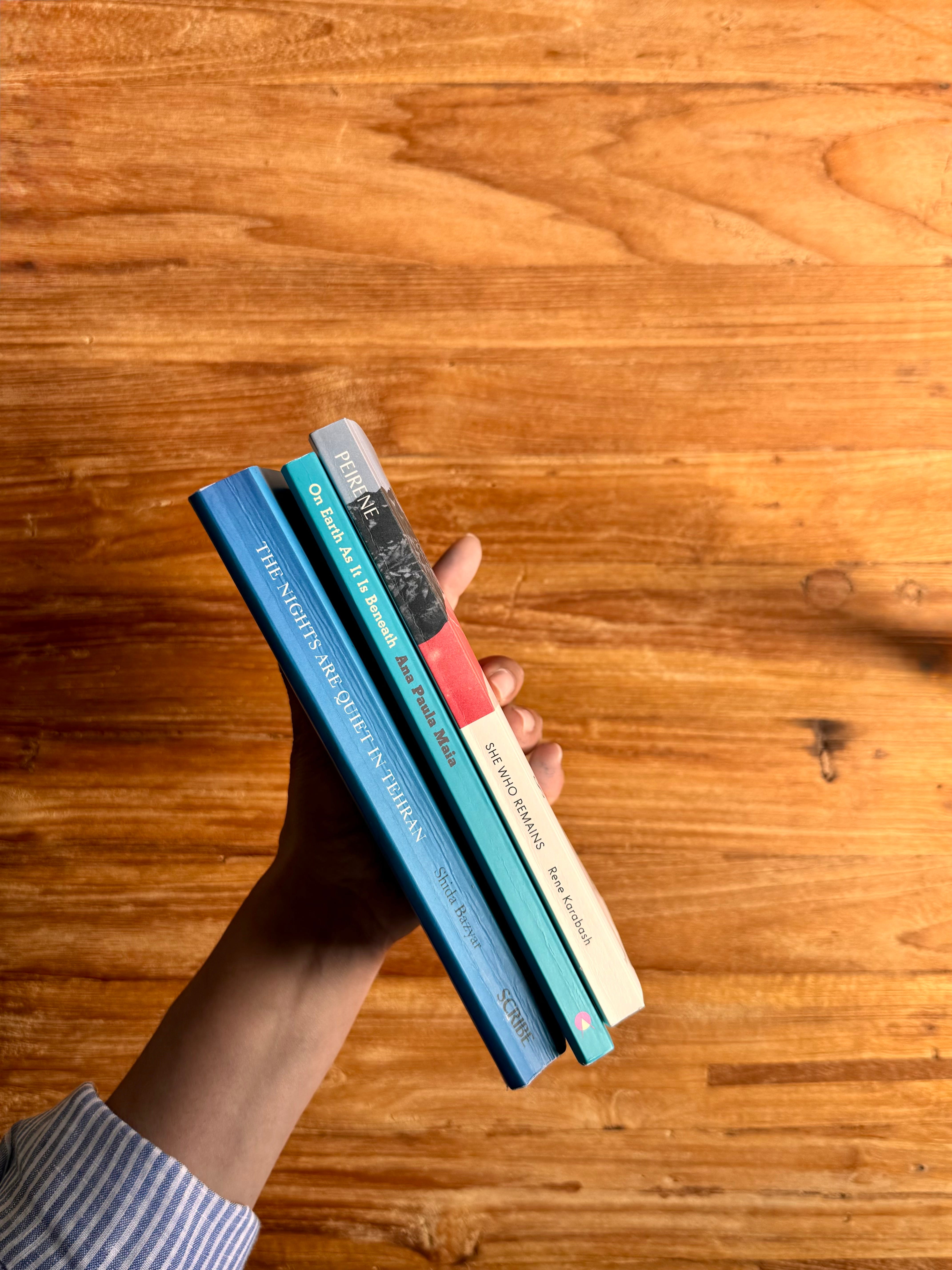
From there I went into She Who Remains, another book read in one sitting but this time I re-read it immediately after finishing it. It reads like a stream of consciousness - no, actually, it reads like a confession, yes the lack of punctuation helps with that but so does the differing versions of events that contradict each other.
Briefly, the book is set in a remote village in the Albanian Accursed Mountains, governed by the Kanun - a centuries-old code of patriarchal law that, among other things, allows a woman to escape an arranged marriage by swearing herself to lifelong chastity and living, legally and socially, as a man.
“the most precious metal in Albania is freedom”
The book follows the circumstances, and the consequences thereafter, of the protagonist making that solemn vow. I went in expecting this book to shine a light on patriarchy and on societal expectations of gender roles - and all of that is there. But what was louder for me, on both reads, was more around what survival makes you do to your own story.
I won’t give the ending away on this one because it is too good - but what I will say is right up until the last fifth of the book, I was with the protagonist. I totally understood why she would make the choice to become a sworn virgin, knowing that this choice would set off a blood feud meaning a male member of her family would die for it. I understood her.
But by the end I didn’t.
Because the narrative she’s been telling to herself, and to us, starts to come apart and what’s underneath it is just how far someone will go to protect themselves. How much they’ll edit. The book becomes about the version of yourself you have to invent to survive, and what survives along with you.
“all desperately desired things materialise one way or another”
Finally, The Nights Are Quiet in Tehran. I’ll say up front, it was the inclusion of this one on the shortlist that tipped me over from “maybe I’ll read a few of the shortlist” to “fine, all of them.” I went in expecting it to be the most urgent. A book that opens in 1979 with a young communist fighting for a new Iran after the Shah, and ends thirty years later in the wake of the Green Revolution - surely this is the book about freedom.
It is. Sort of.
“We don’t ask questions anymore. Since the Revolution, it feels as thought everyone use to ask us questions, and the Revolution was our answer.”
The polyphonic structure - five chapters, each narrated by a different member of the family in different decades - kind of worked and also kind of didn't. The voices are differentiated and there’s a real ambition in letting one history fracture across a number of lives. But the pacing slips, and with it my interest. The urgency of that opening chapter - the secret meetings, the protests, the secret meetings, the protests, the joy of the old order falling - shadowed by what was coming to replace it, gives way to interiority and to longing. Which is, I think, the point. But it’s also why it was the book I was most disappointed with - I think it would have been far more powerful to stay with one timeline and to have stayed within that urgency.
That aside, I enjoyed reading Laleh’s chapter - the teenage daughter of a couple who fled from Iran in the aftermath of the revolution seeking refuge in Germany. Laleh doesn’t fully belong in Germany or in Iran and yet, she identifies with both cultures. There’s something in her chapter that the rest of the book is reaching for - a kind of not-quite-belonging that isn’t politically loud but is constant. For a second generation immigrant like me, the author really captures the guilt of not fully belonging to one culture - the one you’ve “left behind” and the one you’re trying to immerse yourself into.
Which is maybe what the book is actually about - that the freedom her parents risked everything for was lost before they ever reached Germany, and the rest of the novel sits inside what's left. A slow, generational ache that no return visit can fix.
Three books. Three different costs of freedom: death, self, and the place you called home. Out of them all, She Who Remains stands head and shoulders above the rest, but I'm still working through the shortlist…thoughts on The Witch, Taiwan Travelogue, and The Director will be up next week.
Let me know if you’ve read any of these books and what you thought of them - I’d love to know what I missed!
Thank you Ruby for this in-depth analysis. I read She Who Remains but was sadly disappointed after all the hype created around it. I could not bond with the book, the characters on any level though I can see its brilliance and respect it.
The Witch was a total disaster; I feel sorry to say that aı could not get the point why it was included in the shortlist(while leaving behind such modern masterpieces like The Duke for example).
The Director was my absolute favourite; I liked its pace, its style, the way the atmosphere was created in our minds, the deliverance of its messages etc.
And my current read from the list is The Nights Are Quiet In Tehran which carries a high sense of foreboding for me(being Turkish and sort of going through a similar political phase)
I hope I can read through the whole list(the longlist hopefully).
And I love your writing Ruby, I hope you enjoy your reading and continue giving us pleasure with your writing :)
Good analyses, thank you. I also read recently She Who Remains and was mesmerized by the style of the author...so unusual, poetic, melodic, almost enchanting. I finished it in literally two sittings. It is the reading highlight of Q1 this year. I loved this book on many different levels:
1) It talks about an ancient but still existing tradition that could be fascinating if it was not so terrifying.
2) The story is very simple on the surface, but incredibly complex beneath. The author peels away layer after layer with such tenderness and skill that it feels almost seamless.
3) Although the story is ultimately rounded and concluded, the author leaves a lot of space for reader interpretation of the events leading to that conclusion.
4) The author takes significant risks by touching on areas that are very sensitive in the current climate of culture wars, especially in parts of Eastern Europe where the mood is strongly socially conservative.
I enjoyed every single word of this book and would recommend it to anyone interested in complex, deep, and unsettling human stories from Eastern Europe.
I just started The Witch, having a bit of a difficulty to get it going, bu I am still hopeful.