

Over the past few weeks, everything I’ve read and listened to seems to be asking whether AI is a benefit to us or a threat.
I really don’t know where I stand on this…so this is me writing out all of my thoughts (slightly jumbled and full of contradictions) as an invitation for conversation. For anyone who isn’t firmly in one camp or another, you are welcome here.
First, I spent two days with the corporate job listening to a series of panels with industry experts telling us to get on board with AI, find the efficiencies (if you don’t someone else will)…just don't put anything sensitive into the prompts. On the train journey back to the office, I felt that whilst the conversations were positive about AI, there was a faint sense of fear underpinning all that optimism. Learn how to use it otherwise you’ll get left behind, basically.
Then the whole thing with Olga Tokarczuk came out - how she said she used AI to help her research a small detail for one of her novels, and the internet did what the internet does. Two camps formed immediately, the moralisers and the defenders with the conversation collapsing into whether writing itself is so virtuous that it shouldn’t be “tainted” by AI. I’ll come back to this, in a separate essay, once I’ve had the chance to form my own views on it.
Then, in the same week of all of that discourse, I found myself at a lecture at The Royal Institute of Philosophy which put two questions to its panel: is AI a threat, and if so, to what?
Unanimously, the panel agreed that AI poses a threat to a wide range of things - from our imaginations (the constant playback of what is already out there shrinks our ability to picture what isn't), the labour market (we have all heard how AI is going to take all of our jobs) to the question of legal personhood and what happens to accountability when things go wrong. If AI can hide behind its own status the way companies already hide behind corporate structures, who do you actually hold responsible?
I walked out of the building so confused. Two days of optimism against an evening of pessimism and a week of doom on every feed I scrolled. And in all of that absolutely zero clarity on if AI should be something I welcome or something I should avoid.
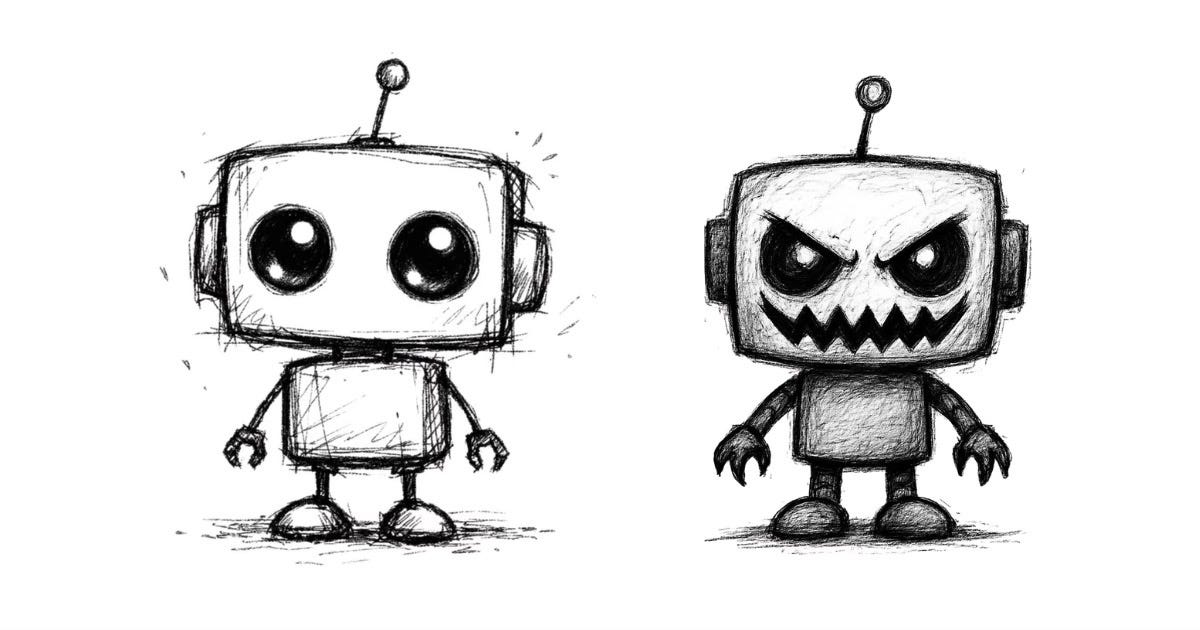
So I asked the question to you guys on Instagram: do you think AI is a threat, and if so, why? Almost every reply said yes, AI is a threat, but the what of the threat varied from the environment to distortion of reality. One person wrote,
I’m torn, I think there’s a lot of anti-AI hype, but I can’t pragmatically describe the threat.
I couldn’t have said it better myself.
Can I go back to the office for a moment? Since using AI at work I have found it incredibly helpful. I use it to synthesise lumps of information and pressure-test arguments. I suppose I am using it the way I would a sharp junior - check the first sweep of this deck and let me know what I’ve missed. Do some research on market data that would challenge my assumptions. Check what our competitors are doing that we aren’t. It does the research in minutes saving hours of time and fees. Yes, 30% of it is utter rubbish but the other 70% can get my brain thinking about things I hadn’t before.
The thing is, I can't help but feel a little guilty.
If AI is doing the first sweep, what chance does the next generation get to build the skill that the first sweep built in me? Those hours of research were perhaps my most formative hours professionally. Or were they? At 2am fuelled by a Dominos, feeling bad about letting my mates down for the third night in a row, was I really at my sharpest? Maybe I've been romanticising the grind, and without all of that drudgery juniors can actually start doing the work that they want to do - what they’ve been trained to do.
And then there's the environmental impact, which a lot of you were also concerned about. We’ve heard about how one ChatGPT query can use ten times the energy of a Google search but newer estimates put the difference much smaller1. The broader environmental impact is in the infrastructure to support the AI searches - which is, of course, still weighing on my conscience.
There’s the guilt but there’s also a fear. I worry about what using AI is doing to my brain - if I listen to every naysayer out there, my brain is rotting every time I ask AI to take a bunch of numbers and create a graph. But the actual study2 that underpins a lot of that noise wasn't that black and white. Yes, those participants that outsourced their thinking to AI before engaging with the task had the weakest neural connectivity and the worst recall of their own writing. But the ones who did the thinking first and used AI afterwards to polish were fine.
OK so maybe it’s not so bad?
But what about what I do with what I get back from AI, am I trusting it too much? One of the panellists in the lecture cited a study3 which surveyed a bunch of CEOs and senior executives at billion-dollar companies. The study found that 74% of them trust AI’s advice more than they trust their colleagues or their friends - and more alarmingly, 44% trusted it more than their own instincts…and then to top it all off 38% said they would delegate business decisions to it entirely. So, the very top of the corporate pyramid - the ones who are paid extortionate amounts of money to exercise judgement using their knowledge and experience, are now increasingly trusting a machine over their own instinct.
In my attempt to find efficiency, as I’ve been told to do, am I heading the same way?
We’ve always been worried about what we lose once we offload something - take phone numbers or say navigation. Socrates, in the Phaedrus, worried that writing would destroy human memory, and he wasn't entirely wrong. But each of those offloadings also freed up cognitive space for us to skill up in other things, right?
The question with AI is whether this is the same kind of trade or whether this time the freed-up space just stays empty. I think I’m leaning toward the optimistic view here, because history, it seems, suggests that we may be worrying about nothing.
But maybe this time it is different. Those phone numbers in our phone? We could memorise them if we wanted to. Or those calculations we whack into Excel, again, we could do those calculations (with a bit of patience and perhaps going back to our GCSE books).
I suppose the threat of AI is more about how it’s being used to help us think. Summarise this. Research that. All of those things include thinking - deciding what’s important and what’s worth following up on. It all comes down to how we use it.
All of that is about me, at my desk in the office, deciding how to work, ethically and consciously, with AI.
But there is a bigger question for those of us who worry about whether to use it at all.
Hannah Glenn recently reminded me about how most political movements are won on the fear that someone else will take our jobs. Yet here we are, broadly accepting that tech companies are openly telling us AI is going to take every job, with no plan for what happens afterwards.
It got me thinking about the supposed benevolent version of what comes next - universal basic income with more leisure time is what I’m hearing but have any of us actually pictured what that looks like?
We don't really know what we'd do with that extra time - one of the panelists at the philosophy lecture even worried about what that extra leisure would do to us psychologically. But, for me, it’s more than that - we haven't agreed on what we are uneasy about, which means we haven't agreed on what we'd want protected, which means we can't agree on what good governance looks like. We are still trying to work out what the conversation is, never mind have it.
AI is shaping up like every other piece of major technology - whichever superpower deploys fastest captures the upside, and the conversation about how it's supposed to work within our society happens later, if at all.
Will we work together as humanity to use AI to change how we work and how we live? Or will we look back and wish we’d thought about it?
I really don’t know.
All of the concerns are valid as are all of the benefits. But without something like a proper cost-benefit analysis at a scale that is honest about the global stakes I am not sure what forward looks like.
So I am throwing this out for debate.
And if we end up in some sort of machine apocalypse, I hope someone reads this in the ashes and sees that we at least tried to have this debate, before it was too late.
I hope you enjoyed today’s free post - subscribe for more notes!
✨ If this piece resonated with you, leaving a like helps the Studio reach more thoughtful readers ✨
See Alex de Vries, The growing energy footprint of artificial intelligence, for the 10x figure and Epoch AI's analysis How much energy does ChatGPT use? for the revised estimates
Kosmyna et al., Your Brain on ChatGPT, MIT 2025. It’s worth noting that the lead author has publicly rejected the "ChatGPT rots your brain" framing the press ran with.
SAP survey, March 2025. SAP does sell AI products so this needs to be read with a pinch of salt!
Perhaps the real question is not whether AI is a threat to humankind, but how humankind chooses to use AI. Technology itself is neither good nor bad—it reflects the intentions, wisdom, and values of those who create and use it. Fire can warm a home or destroy it; the internet can educate or deceive. AI is no different.
As I reflect on this, I am reminded that progress always requires responsibility. Fear alone should not guide our response to new technology, nor should blind optimism. Instead, we should approach AI with curiosity, caution, and a commitment to using it for the greater good.
You're right at the individual level. The person who learns the tool will out-compete the one who refuses, every time. No argument there.
The bit this misses is what happens above the individual. If AI makes one person do the work of five, the firm doesn't keep five people producing five times the output. It keeps one and lets four go. "Someone using AI better than you" wins their seat, but the seat next to them disappears. That's not a skills problem, it's a demand problem, and you can't upskill your way out of a shrinking number of jobs.
The productivity gains don't tend to land in wages either. They land with whoever owns the system. You can master the exact tool that makes your role redundant and still be shown the door when headcount gets cut.
So yes, learn it. Just don't mistake individual advice for a market-level answer. Fewer chairs is fewer chairs, no matter how good you've got at sitting.