
Are we all the same?
Philosophy Curriculum #40: On the Upanishads and whether I can give up being me

I'm a Gemini. According to one online test I have a 'red' subconscious personality type, and according to another my love language is acts of service.
I’m all of these things and none of these things really explains who I am.
All I know is that I am me. And above everything, that’s the thing I’m most sure of.
My sister has more patience than I do. My husband forgives more slowly than I do. My best mate trusts people more easily than I ever have. That's part of what makes our relationships work — we bring our differences and balance each other out.
But according to the Upanishads, I might have all of that wrong.
Last week I struggled with the concept of the ungraspable self: a self we can never meet, even though we know it’s there, deep inside us. This week I’m still on the struggle bus - just a different one, going a bit further underground.
तत् त्वम् असि
Tat Tvam Asi
Thou art that
Alongside the central teaching of the ungraspable self sits another one: that we are all the same. I’m simplifying here of course but without turning this into an academic exercise (that I couldn’t pull off with any credibility anyway) that’s how I understand it.
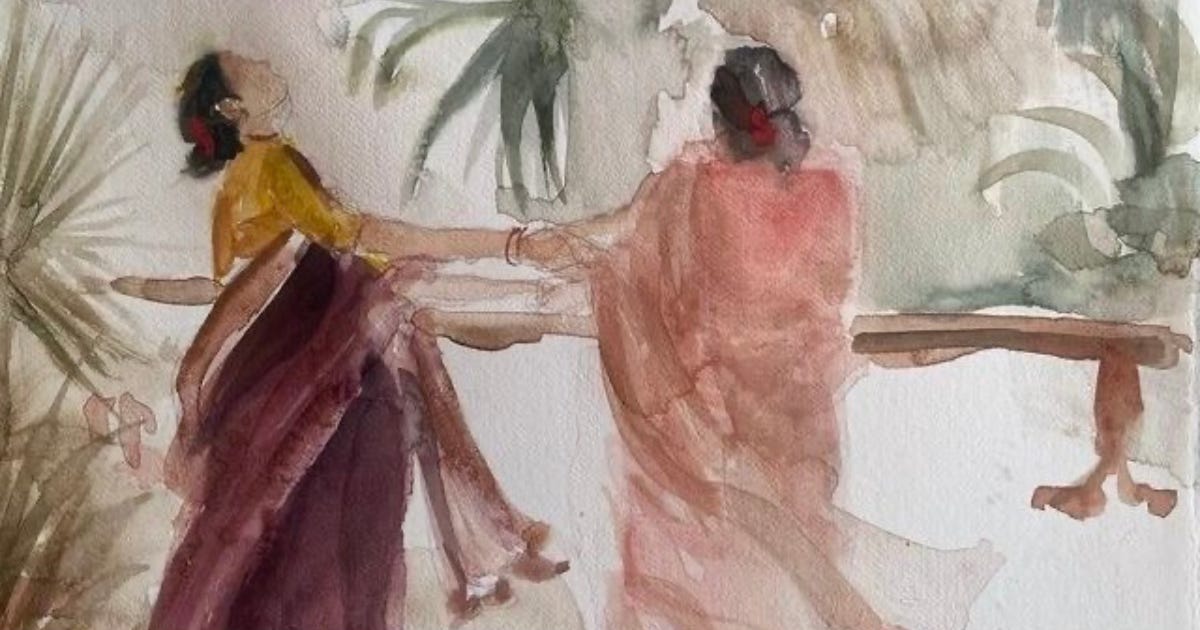
Across several of the Upanishads, we’re told we’re not as separate from one another as we think. The essence that runs deep inside us - that ungraspable self - is the same essence that runs in everyone around us. And in everything. The sap in a tree, the one brain cell rolling around in my cat’s head, the salt once you’ve stirred it into water.
And this self, this Ātman, is immortal - it endures long after our bodies have gone.
At first I found all of this a bit mystical. But the more I re-read the passages, the more I thought there was a harder metaphysical claim underneath:
There is only one reality.
What looks like a world of separate things is actually one thing. The sap in the tree, the cell in the cat, the self in me. It’s the same essence manifesting through different shapes.
If that’s right, what does it do to individuality?
Does it mean there’s no such thing as an individual at all?
The rest of this post is for members of the Studio.
To celebrate my birthday week (and yes, I celebrate for a week) I'm offering 10% off annual subscriptions for anyone looking to make a bit more room for their own thinking this year.
✨ If this piece resonated with you, leaving a like helps the Studio reach more thoughtful readers ✨
There’s an innate need, a human one, to feel that we’re individuals, and that our individuality lasts somehow after we’re gone.
